HOW TO COMMUNICATE YOUR NEEDS WITHOUT STARTING AN ARGUMENT
Communication
WHY IS IT SO HARD TO COMMUNICATE YOUR NEEDS?
Many people know what they need but struggle to say it.
You might want more attention, more quality time, more affection, or simply better communication.
But instead of saying it directly, you stay quiet.
Maybe you don't want to seem needy.
Maybe you don't want to create conflict.
Maybe you expect your partner to notice.
Eventually, the frustration builds up.
And when you finally say something, it may come out as criticism rather than communication.
Learning to communicate your needs earlier can prevent many of these situations.
START WITH WHAT YOU FEEL
Before talking to your partner, try to understand your own emotions.
Instead of immediately thinking:
"They don't care about me."
Ask yourself:
"What happened that made me feel this way?"
Maybe you felt ignored.
Maybe you felt disconnected.
Maybe you felt unappreciated.
Being specific about the emotion can help you explain the problem without turning it into an accusation.
TALK ABOUT YOUR EXPERIENCE
One of the simplest ways to make a difficult conversation more productive is to talk about your own experience.
Instead of:
"You never listen to me."
Try:
"I feel like I'm not being heard when I'm talking about something important to me."
Instead of:
"You don't spend enough time with me."
Try:
"I've been feeling disconnected from you lately, and I'd like us to spend more time together."
The difference is small, but important.
You're describing your experience rather than defining your partner's character.
BE SPECIFIC ABOUT WHAT YOU NEED
Saying "I need more from you" doesn't give your partner much information.
What does "more" actually mean?
More time?
More affection?
More communication?
More reassurance?
More help?
Try turning a general feeling into a specific request.
For example:
"I'd like us to have one evening a week where we put our phones away and spend time together."
Now your partner knows exactly what you're asking for.
Clear communication gives the other person something they can actually respond to.
DON'T WAIT UNTIL YOU'RE ANGRY
The longer you keep something inside, the more emotional the conversation can become.
A small issue can turn into months of frustration.
Then one day, something minor happens and everything comes out at once.
If something matters to you, it's usually better to talk about it before resentment builds.
You don't need to have a serious conversation every time something feels slightly uncomfortable.
But if the same issue keeps coming back, it's worth addressing.
CHOOSE THE RIGHT MOMENT
Even a good conversation can go badly if the timing is wrong.
If your partner is exhausted, distracted, rushing somewhere, or already angry, they may not be able to listen properly.
Instead of starting immediately, try:
"There's something I'd like to talk about. Is now a good time?"
This gives both of you a chance to approach the conversation with a clearer mind.
Sometimes waiting an hour can completely change the outcome.
LISTEN TO THEIR SIDE
Communicating your needs doesn't mean your partner has to immediately agree with everything you say.
They may have a different perspective.
They may explain something you didn't know.
They may have needs of their own.
Try to listen without immediately preparing your next argument.
You can ask:
"How do you see it?"
"Did you realize I was feeling this way?"
"Is there something you need from me too?"
A conversation becomes much more productive when both people feel heard.
DON'T USE ABSOLUTE WORDS
Words like "always", "never", and "every time" can quickly make someone defensive.
"You never listen."
"You always ignore me."
"You don't care about anything I say."
Even if you're frustrated, these statements usually make the other person focus on proving you wrong instead of understanding the problem.
Try describing the specific situation instead.
"I felt ignored when I was trying to talk to you yesterday."
Specific examples are easier to discuss than general accusations.
REMEMBER THAT A NEED IS NOT A DEMAND
There is an important difference between communicating a need and demanding a specific behavior.
You can say:
"I need more quality time together."
But that doesn't necessarily mean your partner has to spend every evening with you.
The goal is to communicate what matters to you and find a solution together.
Relationships require compromise.
Your needs matter.
So do your partner's.
WHAT IF YOUR PARTNER BECOMES DEFENSIVE?
Sometimes you can communicate calmly and your partner may still become defensive.
Try not to immediately match their energy.
You can say:
"I'm not trying to attack you. I'm trying to explain how I've been feeling."
If the conversation becomes too heated, taking a break can help.
You don't have to solve everything in one conversation.
The important thing is to come back to the topic when both of you are ready to continue.
GOOD COMMUNICATION IS A TWO-WAY PROCESS
Healthy communication isn't about finding the perfect way to make your partner do what you want.
It's about understanding each other.
You communicate your needs.
They communicate theirs.
You listen.
You explain.
You compromise where possible.
And you decide together what needs to change.
Not every conversation will end with both people getting exactly what they want.
But both people should have the opportunity to be heard.
SAY WHAT YOU NEED BEFORE IT BECOMES RESENTMENT
You shouldn't have to wait until you're completely frustrated to tell someone what's wrong.
If something matters to you, give your partner the chance to understand it.
Be honest.
Be specific.
Talk about your feelings rather than attacking their character.
And remember that asking for what you need isn't the same as being demanding.
The goal of communication isn't to avoid every disagreement. It's to make sure both people can be honest without turning every difficult conversation into a fight.

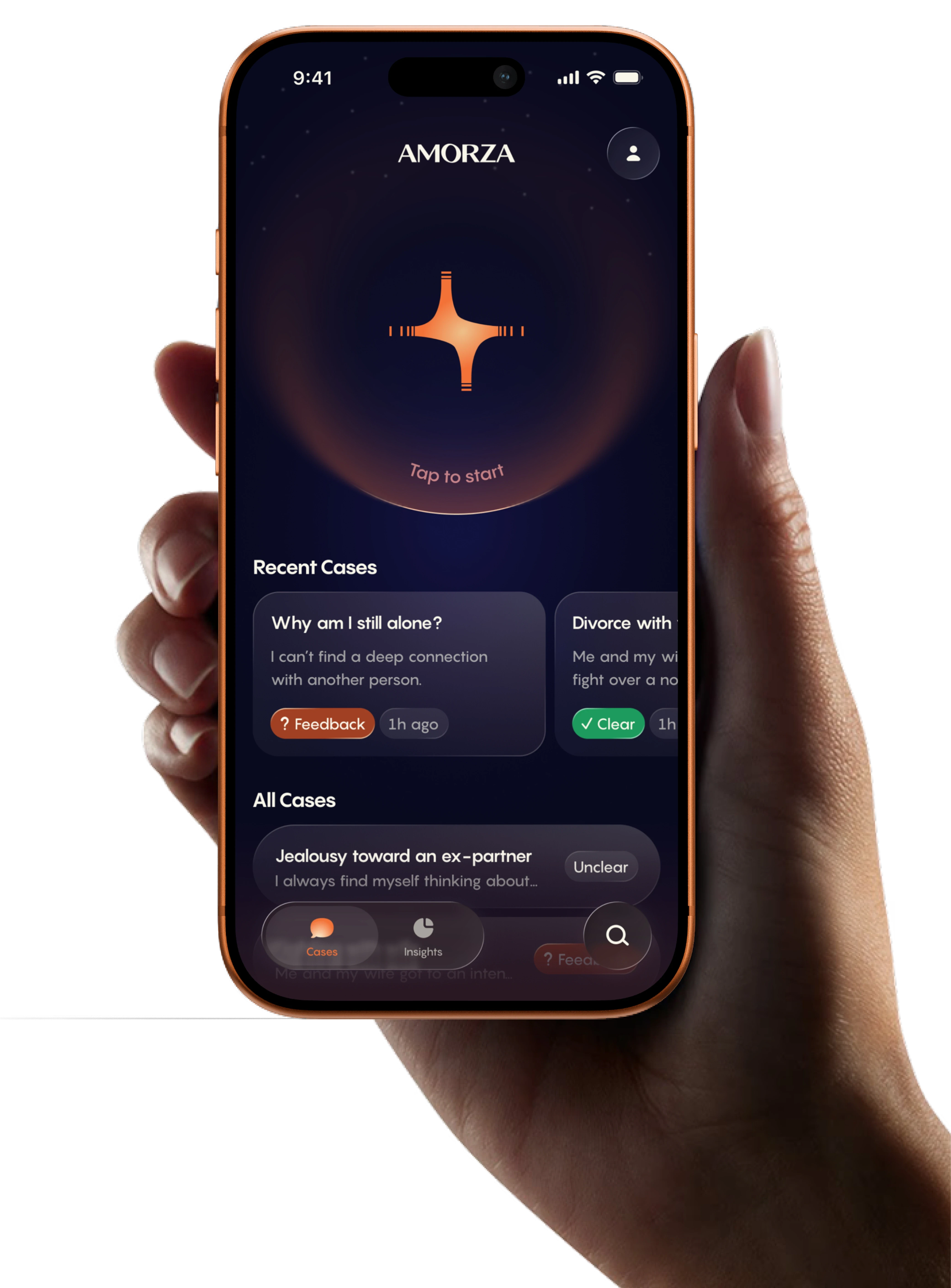
Amorza is an AI tool for relationship clarity.
It is not a substitute for professional psychological or therapeutic support.