WHY YOU KEEP MISSING THE SAME RED FLAG
Reading Signals & Red Flags
WHY YOU KEEP MISSING THE SAME RED
FLAG
Afterward, it's always obvious. You look back and the sign was right there — in week two, in the first
month, sometimes on the first date. You saw it. You even mentioned it to a friend. And you stayed
anyway.
Then it happens again, in a different relationship, with a different person, and somehow the same flag
slips past you a second time. Not because you didn't notice it. Because noticing was never the
problem.
Seeing a red flag and acting on it are two different skills
Most red-flag advice focuses entirely on recognition — here's a list of ten signs, learn to spot them.
But you probably already spot them. The gap isn't awareness. It's what happens in the half-second
after you notice, when the recognition either turns into action or gets talked back down.That talking-down has a shape, and it's usually one of a few familiar stories: it's not that serious.
Everyone has flaws. Maybe I'm reading too much into it. They were just having a bad day. Each one
is individually plausible. That's exactly why it works.
The same flag, dressed differently
One reason it feels like a new mistake every time is that the flag rarely looks identical twice. The
controlling behavior that showed up as jealousy in one relationship might show up as "concern" in the
next. The emotional unavailability that looked like busyness before might look like humor and
deflection this time.
Different costume, same shape. Which is exactly why it's so hard to catch by memory alone — you're
not pattern-matching against the last relationship, you're pattern-matching against a much older,
quieter belief about what you're supposed to tolerate.
Where the real blind spot usually is
It's rarely about not knowing what a red flag looks like in general. It's about a specific flag that
connects to something older — a familiar dynamic from earlier in life, a version of love that came with
conditions, a story about what you deserve that was written long before this relationship started.
That's the actual reason the same flag keeps getting past you. It's not a knowledge gap. It's a blind
spot with a history.
What actually closes the gap
Catching it in the moment, not after the fact, takes more than a mental checklist. It takes actually
seeing your own pattern — not this one relationship's red flag, but the specific flag that keeps
recurring across your relationships, so you recognize it faster the next time it shows up in a new
costume.
That's a different kind of seeing than remembering a list. It's seeing yourself.

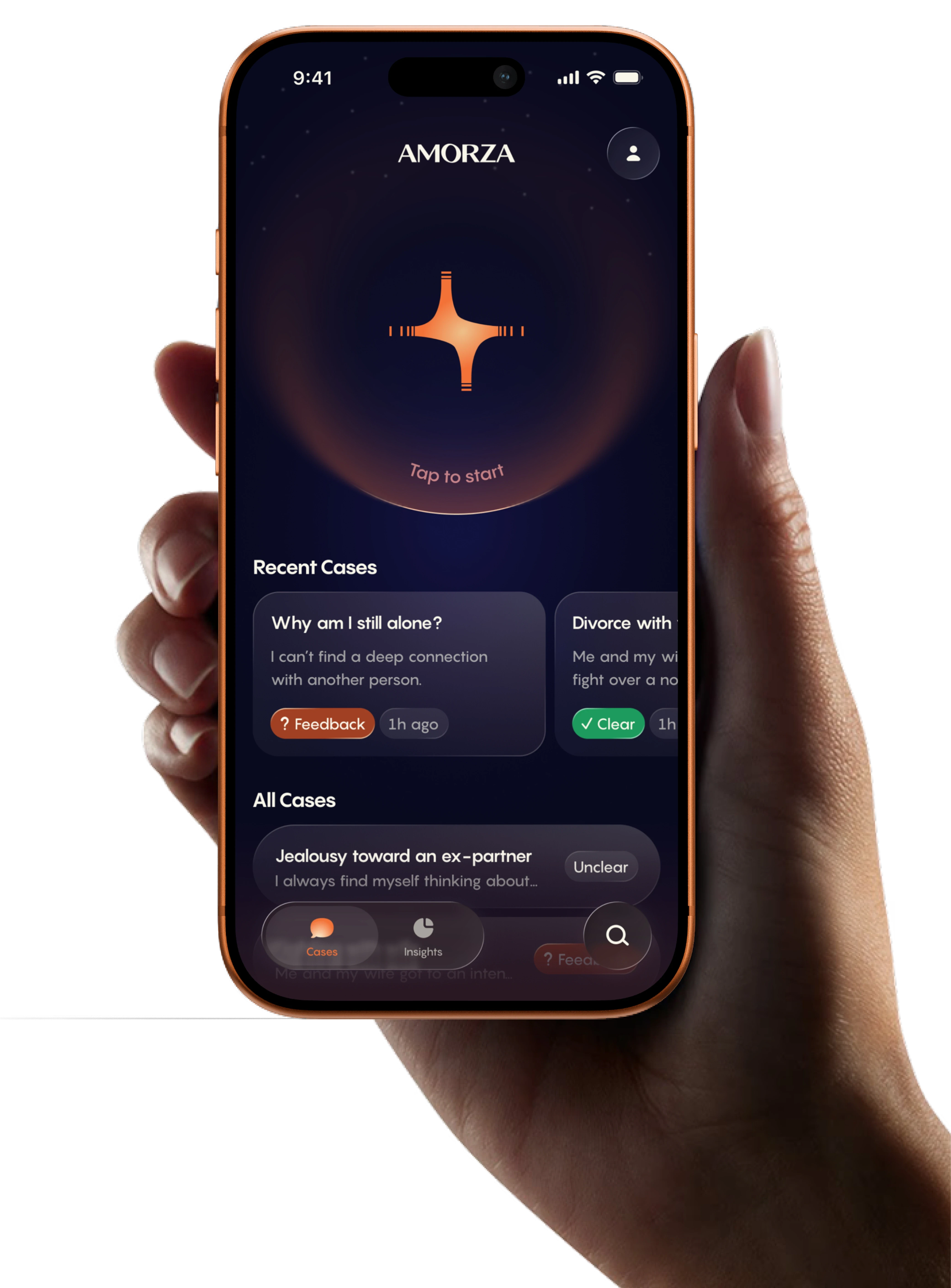
Amorza is an AI tool for relationship clarity.
It is not a substitute for professional psychological or therapeutic support.