HOW TO COMMUNICATE BETTER IN A RELATIONSHIP
Relationships
Why Communication Matters in a Relationship
Every relationship has misunderstandings.
You will disagree about things. You will sometimes say something the wrong way. Your partner may misunderstand what you meant, and you may misunderstand them.
The difference between a healthy relationship and an unhealthy one isn't the absence of conflict.
It's how you handle it.
Good relationship communication creates space for both people to express what they think, feel, and need without immediately turning the conversation into an argument.
When communication breaks down, even small problems can become much bigger.
A missed message becomes a question about whether they care.
A disagreement becomes a fight.
A need that wasn't expressed becomes resentment.
Over time, these small moments can create emotional distance.
TALK ABOUT THE PROBLEM, NOT THE PERSON
One of the easiest ways for a conversation to become an argument is to turn a specific problem into a judgment about your partner.
Compare:
"You never listen to me."
with:
"I felt like you weren't listening when I was telling you about my day."
The first statement attacks their character.
The second describes a specific situation and how it made you feel.
This doesn't mean you should hide your frustration. It means you should communicate the actual problem instead of making your partner defend themselves.
Try focusing on:
What happened
How it made you feel
What you need
What you would like to change
This makes difficult conversations much easier to navigate.
DON'T EXPECT YOUR PARTNER TO READ YOUR MIND
One of the most common relationship communication problems is expecting your partner to automatically know what you need.
You might think:
"If they really loved me, they would know."
But people don't automatically understand each other's needs.
You may want more affection.
Your partner may think giving you space is helpful.
You may want them to ask about your day.
They may assume you want to relax after work.
Neither person necessarily has bad intentions.
You're simply operating with different expectations.
Healthy relationships require communication because your partner can't respond to a need they don't know exists.
LEARN HOW TO EXPRESS YOUR NEEDS
A relationship becomes easier when you can clearly communicate what you need.
Instead of:
"You never spend time with me."
Try:
"I'd like us to have one evening this week where we're not doing anything else and can just spend time together."
The second version gives your partner something they can actually respond to.
Being specific is important.
Instead of saying:
"I need more attention."
You could say:
"I'd love it if we could talk for a little while before going to sleep instead of both being on our phones."
The clearer the request, the easier it is for both people to understand what you're asking for.
LISTENING IS PART OF COMMUNICATION
Communication isn't only about expressing yourself.
It's also about understanding the other person.
When your partner is talking, try not to immediately prepare your response.
Listen to understand what they're actually saying.
You don't have to agree with everything they say.
You can understand someone's feelings without agreeing with their interpretation of a situation.
Try asking questions such as:
"What made you feel that way?"
"What do you need from me right now?"
"Is there something you feel like I'm not understanding?"
These questions can change the entire direction of a conversation.
HOW TO HANDLE ARGUMENTS IN A HEALTHY WAY
Arguments are normal.
Certain behaviors during arguments, however, can seriously damage a relationship.
Try to avoid:
Insults
Threats to end the relationship
Bringing up unrelated past mistakes
Ignoring your partner to punish them
Trying to "win" the argument
Making absolute statements like "always" and "never"
Saying things specifically to hurt the other person
The goal of an argument shouldn't be to prove that you're right.
The goal should be to understand the problem and figure out what happens next.
Sometimes that means taking a break.
If emotions are getting too high, it's okay to say:
"I don't think we're going to solve this while we're both upset. Can we take some time and come back to this later?"
Taking space to calm down is different from using silence to punish someone.
DON'T AVOID DIFFICULT CONVERSATIONS
Avoiding conflict can feel easier in the short term.
You don't want to start another argument, so you stay quiet.
You let something go.
Then it happens again.
Eventually, the things you never talked about start building up.
Healthy communication doesn't mean constantly confronting your partner.
It means being willing to talk about important things before they become bigger problems.
If something continues to bother you, ask yourself:
"If nothing changed, would I still be okay with this six months from now?"
If the answer is no, it may be time to have the conversation.
CHOOSE THE RIGHT TIME
Timing can make a huge difference.
Trying to solve a serious relationship problem when one person is exhausted, angry, distracted, or rushing somewhere usually isn't going to help.
Instead, ask:
"Is now a good time to talk about something that's been bothering me?"
This simple question gives both people a chance to prepare for the conversation.
You don't need to solve everything immediately.
Sometimes the healthiest thing you can do is agree to talk later when both people are in a better state of mind.
WHAT TO DO WHEN YOU FEEL MISUNDERSTOOD
Feeling misunderstood by your partner can be frustrating.
Before assuming they don't care, try explaining yourself differently.
Sometimes the problem isn't that they don't want to understand you.
They simply understood something differently than you intended.
Try:
"I don't think I'm explaining this very well. What I'm trying to say is..."
You can also ask:
"What did you hear me saying?"
This can reveal where the misunderstanding happened.
Good communication isn't about getting everything right the first time.
It's about being willing to clarify.
HEALTHY COMMUNICATION TAKES PRACTICE
You don't suddenly become a great communicator because you learn a few techniques.
Communication is a skill.
It gets better through practice, self-awareness, and honest conversations.
You will still misunderstand each other.
You will still have arguments.
You will still say things you wish you had said differently.
What matters is what happens afterward.
Can you talk about it?
Can you take responsibility?
Can you listen?
Can you repair the situation?
Can you understand each other a little better than you did before?
Those are the moments that build stronger relationships.
THE GOAL IS UNDERSTANDING
The best relationship communication isn't about finding the perfect words.
It's about creating enough safety and honesty for both people to be real.
You should be able to say what you need.
Your partner should be able to do the same.
You should be able to disagree without attacking each other.
And when something goes wrong, you should be able to come back to the conversation.
You don't need perfect communication to have a healthy relationship.
You need the willingness to keep trying to understand each other.
Better communication doesn't mean fewer difficult conversations. It means knowing how to have them.

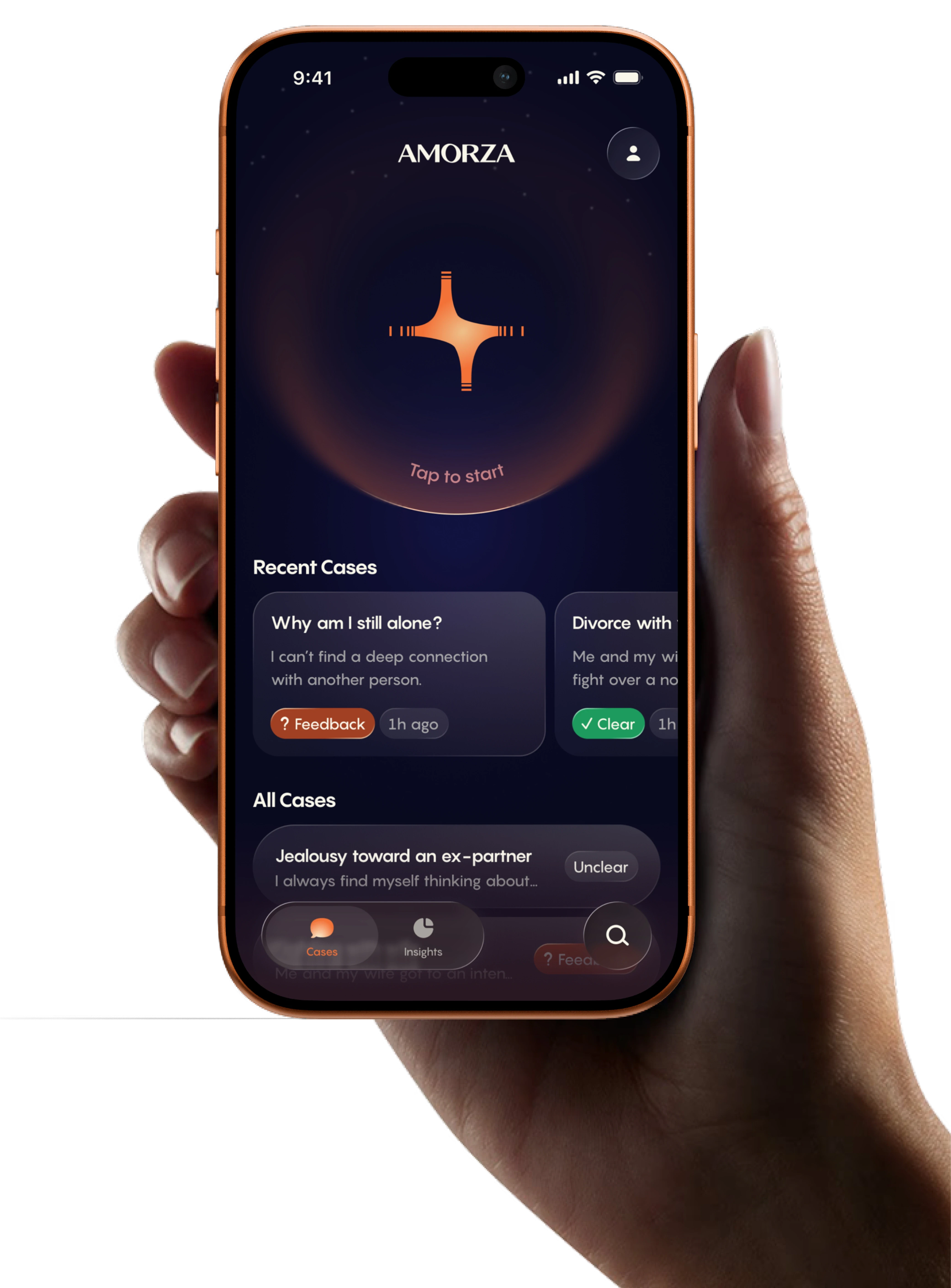
Amorza is an AI tool for relationship clarity.
It is not a substitute for professional psychological or therapeutic support.