WHAT MIXED SIGNALS MEAN IN A RELATIONSHIP
Relationships
WHAT ARE MIXED SIGNALS?
Mixed signals happen when someone's words and actions don't seem to match.
They tell you they care, but rarely make time for you.
They seem interested when you're together, but become distant afterward.
They talk about the future, but avoid conversations about the relationship.
They say everything is fine, but their behavior makes you feel like something has changed.
These situations can leave you constantly trying to figure out what the other person actually wants.
And the more confusing the behavior becomes, the more you may start analyzing every small interaction.
WHY DO MIXED SIGNALS FEEL SO CONFUSING?
Relationships usually become stressful when there is a gap between what someone says and what they do.
If someone tells you they care about you and consistently acts like they care, there isn't much to decode.
But when their words and actions don't match, uncertainty appears.
You start asking:
"Do they actually like me?"
"Are they losing interest?"
"Why are they acting differently?"
"Should I give them space?"
"Am I overthinking this?"
The difficult part is that one isolated moment rarely gives you the answer.
You need to look at the bigger pattern.
LOOK AT ACTIONS, NOT JUST WORDS
Words matter.
But behavior often gives you additional information.
Someone can say they want to see you, but if they repeatedly cancel plans and never suggest another time, that behavior is worth noticing.
Someone can say they care about the relationship, but if they consistently avoid difficult conversations, there may be a disconnect between what they say and what they are willing to do.
This doesn't automatically mean they don't care.
People can be busy, stressed, emotionally overwhelmed, or simply communicate differently.
The important thing is consistency.
One missed message doesn't tell you much.
A repeated pattern might.
DON'T OVERANALYZE EVERY SMALL MOMENT
Mixed signals can create a habit of searching for clues.
You notice how quickly they replied.
You analyze their tone.
You look at whether they liked your message.
You notice who they follow.
You compare how they behaved yesterday with how they behave today.
But individual moments rarely provide enough information to understand a relationship.
Instead of asking:
"What does this one thing mean?"
Ask:
"What pattern do I see over time?"
This gives you much more useful information.
ASK YOURSELF WHAT YOU ACTUALLY KNOW
When someone is giving you mixed signals, separate facts from assumptions.
For example:
Fact: They have cancelled your last two plans.
Assumption: They don't care about me anymore.
Fact: They have been less communicative this week.
Assumption: They are interested in someone else.
The assumptions might be true.
But you don't know yet.
Keeping facts separate from interpretations helps you avoid turning uncertainty into certainty.
You don't need to ignore your feelings.
You simply need to avoid treating every fear as a fact.
COMMUNICATION CAN REMOVE A LOT OF UNCERTAINTY
Sometimes the simplest way to understand mixed signals is to ask.
You don't need to make it dramatic.
You could say:
"I've noticed we've been communicating differently recently. Is everything okay?"
Or:
"Sometimes I'm not sure where we stand. How are you feeling about us?"
A direct question gives the other person an opportunity to explain.
Their response is information.
But pay attention not only to what they say.
Pay attention to whether their behavior changes afterward.
WHAT IF THEY SAY THEY DON'T KNOW WHAT THEY WANT?
Sometimes mixed signals happen because someone genuinely isn't sure what they want.
They may enjoy spending time with you but not be ready for a serious relationship.
They may have feelings but be emotionally unavailable.
They may be interested but uncertain about the future.
You don't necessarily need to convince them.
Instead, ask yourself whether their level of certainty is enough for you.
Someone else's uncertainty doesn't have to become your problem to solve.
You are allowed to want clarity.
You are also allowed to decide that waiting indefinitely for someone to figure out what they want isn't right for you.
DON'T TRY TO EARN SOMEONE'S CONSISTENCY
When someone becomes distant, it's easy to think you need to do something differently.
Maybe you should text less.
Maybe you should become more interesting.
Maybe you should give them more attention.
Maybe you should make them jealous.
Maybe if you act differently, they'll finally choose you.
But a healthy relationship shouldn't require you to constantly perform for someone's attention.
You shouldn't have to convince someone to communicate with you.
You shouldn't have to earn basic consistency.
A relationship works best when interest and effort come from both sides.
WHEN MIXED SIGNALS ARE A REAL RED FLAG
Not every mixed signal is a red flag.
People have bad days.
Life gets busy.
Feelings can change.
Communication can sometimes be imperfect.
But repeated inconsistency can become a problem.
Pay attention if someone regularly:
Says one thing and does another
Avoids defining the relationship while expecting emotional closeness
Disappears and returns whenever it suits them
Gives affection and attention only when they want something
Refuses to communicate about important issues
Makes you constantly question where you stand
The issue isn't one confusing moment.
It's the repeated pattern.
YOU DON'T HAVE TO SOLVE THE MYSTERY
One of the biggest mistakes you can make with mixed signals is turning the relationship into a puzzle.
You keep searching for the perfect explanation.
You analyze conversations.
You ask friends what they think.
You look for signs.
You try to predict what will happen next.
But sometimes the answer isn't hidden.
Sometimes the inconsistency itself is the information.
If someone consistently makes you feel confused about where you stand, that's something worth paying attention to.
You don't necessarily need to know exactly why they behave that way before deciding what you need.
CLARITY MATTERS MORE THAN CERTAINTY
You may never know exactly what someone is thinking.
You can't read another person's mind.
But you can look at their behavior, communicate openly, and decide what works for you.
The goal isn't to achieve complete certainty about another person.
It's to have enough clarity to make decisions that feel right for you.
Ask yourself:
Do their words and actions generally match?
Do I feel respected and valued?
Can we talk openly about what we're experiencing?
Is this relationship giving me more clarity or more confusion?
Those questions are often more useful than trying to decode every individual signal.
You don't need to understand every mixed signal. You need to understand the relationship pattern behind them.

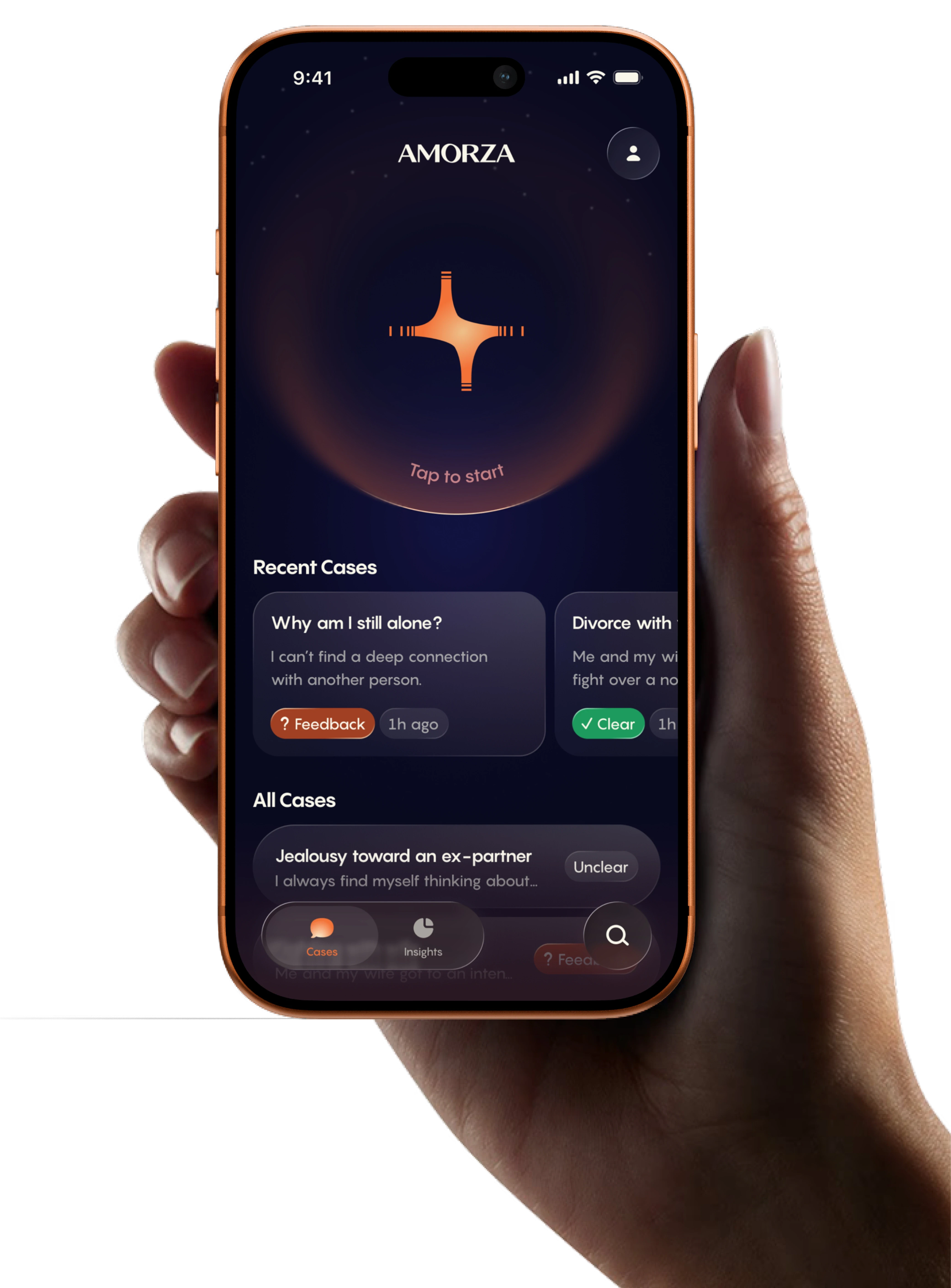
Amorza is an AI tool for relationship clarity.
It is not a substitute for professional psychological or therapeutic support.